2 Oz Its a 10 Miss America Review
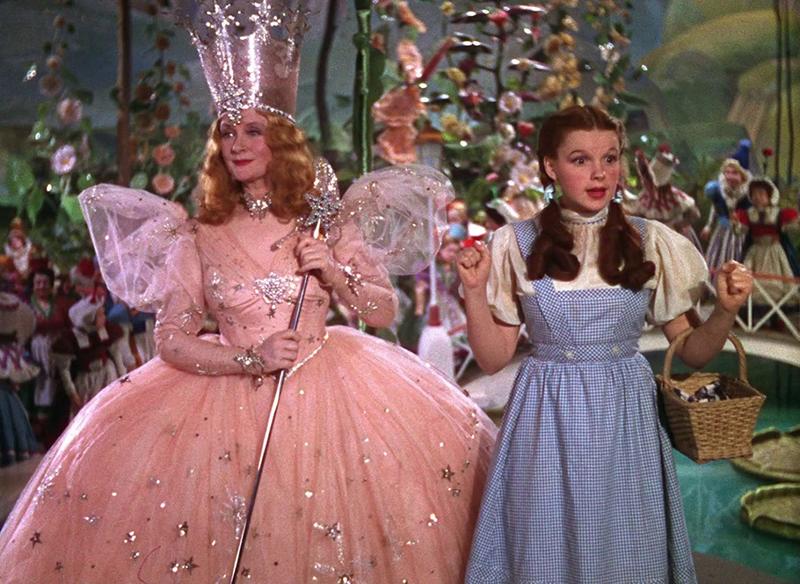
From offscreen friendships and jarring pay inequality to the special effects and makeup tricks that brought some of the globe's favorite film characters to life, The Wizard of Oz (1939) had so much going on behind the emerald curtain and the Technicolor gloss of an amazing fantasy world.
In honor of the 80th anniversary of the film, follow the yellow brick slideshow to peek behind that curtain and learn more about the secrets and fun facts that make the beloved movie a timeless classic.
Margaret Hamilton Was a Fan Before the Pic
As a self-proclaimed lifelong fan of Fifty. Frank Baum'southward Oz serial, Margaret Hamilton was thrilled to be considered for a role in the 1939 film adaptation. Hamilton chosen her agent to enquire which character the producers wanted her to play, and her agent famously said, "The witch — who else?"

Hamilton, a single female parent, fought MGM for an agreed upon corporeality of guaranteed work time. 3 days before filming began, the studio agreed to a v-calendar week deal. In the end, Hamilton was on set for three months, simply many of her scenes were cut for being too scary for audiences.
Dorothy's Original Expect Was More Movie Star Than Farm Girl
Sure, Dorothy Gale doesn't need prosthetics or aluminum makeup, only that doesn't mean Judy Garland wasn't put through the costume section wringer. Although she was young at the fourth dimension, the 16-year-old Garland had to wear a corset-like device so she looked more like a preadolescent child.
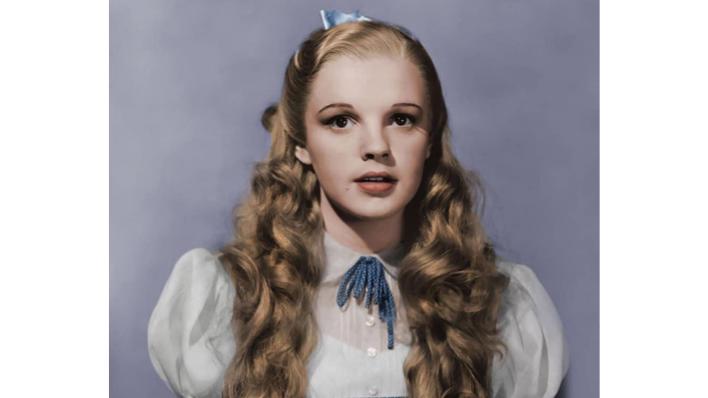
Director Richard Thorpe suggested Garland vesture a blonde wig and loads of "baby-doll" makeup (every bit any preadolescent girl would…). Luckily, that vision of the character inverse. Afterwards MGM fired Thorpe, the intermediate managing director George Cukor nixed the heavy makeup and wig. Instead, he told Garland to exist herself. Smart motility.
The "Skywriting" Scene Employed Some Great Film Magic
The Magician of Oz employs a lot of neat film tricks, and some of the about unique were used in the skywriting scene. In it, the Wicked Witch (Margaret Hamilton) flies above the Emerald Urban center, leaving the phrase "Surrender Dorothy" in her wake in black smoke.
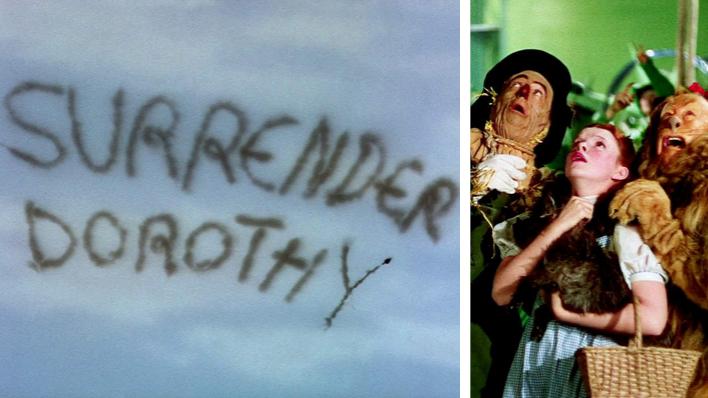
Using a hypodermic needle, the special effects team spread black ink across the bottom of a drinking glass tank that was filled with a thick, tinted liquid (some speculate milk). They wrote the phrase in reverse and filmed the scene from below. Initially, the skywriting ended with the ominous "Or Die — W West W."
The "Snow" in the Poppy Field Was Actually Unsafe
One of the Wicked Witch'southward terminal-ditch efforts to impede Dorothy's quest to meet the Wonderful Sorcerer of Oz involves a poppy field and some magical sleep-inducing snow. While many like to joke that the poppies and their drowsiness are the result of opium (a component of poppies), the scene has a much more than blatant toxic connexion than that.
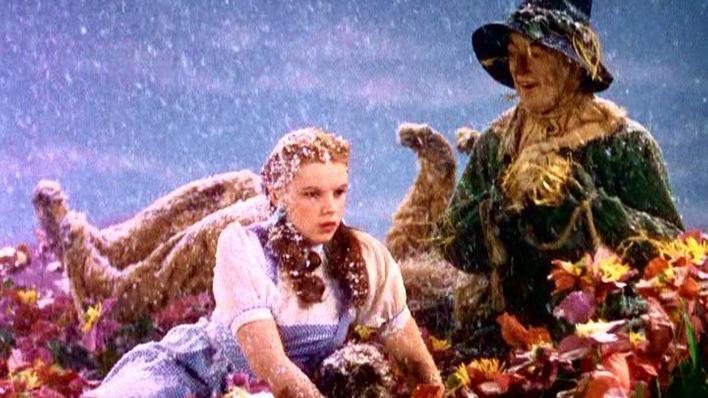
All that magical snowfall? It'southward actually 100% industrial-grade chrysotile asbestos. Even though the health risks associated with the material were known at the time, information technology was still Hollywood's preferred option for faux snow. Our advice to Dorothy? Don't catch any snowflakes on your natural language.
Scarecrow's Makeup Stuck Around for Awhile
In the cease, Ray Bolger (Scarecrow) was probably grateful in more ways than one for Buddy Ebsen (the original Tin Homo's) willingness to trade parts with him. The Tin Man'due south aluminum makeup caused a huge amount of bug for Ebsen, who was replaced by Jack Haley.
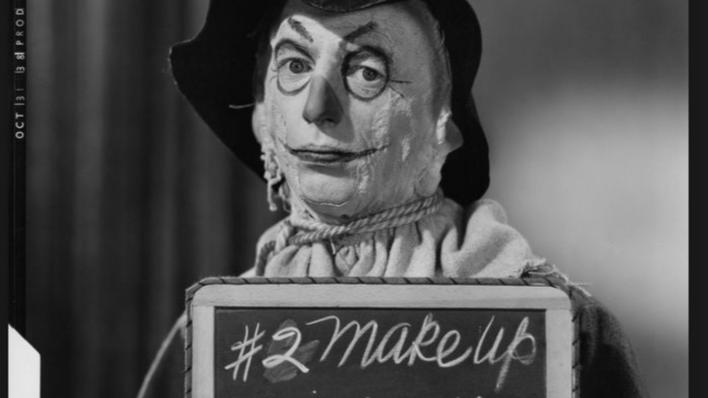
Although Bolger's makeup experience was better than Ebsen's, he withal had some problems. The Scarecrow'southward makeup consisted of a rubber prosthetic, complete with a woven pattern that mimicked the look of burlap. Later on the film wrapped, the prosthetic left patterns on Bolger's face that took more than a twelvemonth to fade.
Margaret Hamilton Was Burned On Set
In a burst of flames and red fume, the Wicked Witch (Margaret Hamilton) vanishes from Munchkinland. Although the scene is terrifying for viewers, information technology may have instilled more than fear for Hamilton. On the offset take, the fume rose from a subconscious trapdoor also early.
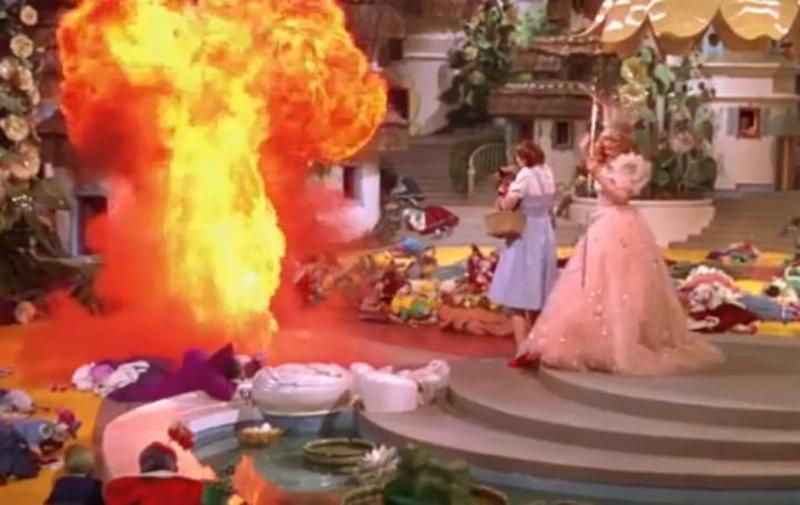
For the second accept, Hamilton stood on the trapdoor as planned, just her greatcoat snagged on the platform when the burn down flared up. Her copper-containing makeup heated up instantly, causing second- and tertiary-caste burns on her hands and face. To make matters worse, the coiffure tried to remedy her burns with (an even more than painful) acetone solvent.
The Flight Monkeys Became Falling Monkeys
The Wicked Witch's legion of flying monkeys — or Winged Monkeys as they're called in the source material — take certainly been a source of terror for generations. Well-nigh as scary every bit the Witch herself, these henchmen soar onto the scene to kidnap Dorothy and Toto — thanks to the magic of pianoforte wires.

However, the aeriform stunt went awry when several of the pianoforte wires snapped, sending actors plummeting a few feet to the soundstage floor. To create such a vast troupe of monkeys (and cut down on human marionettes), filmmakers made miniature rubber monkeys to help populate the sky.
"Over the Rainbow" Was About on the Cutting Room Floor
To no one's surprise, the American Motion-picture show Institute ranked "Over the Rainbow" #1 on a list of 100 Greatest Songs in American Films. Just what may surprise y'all? The (arguably) most iconic song of Judy Garland's career was almost cutting from the film.
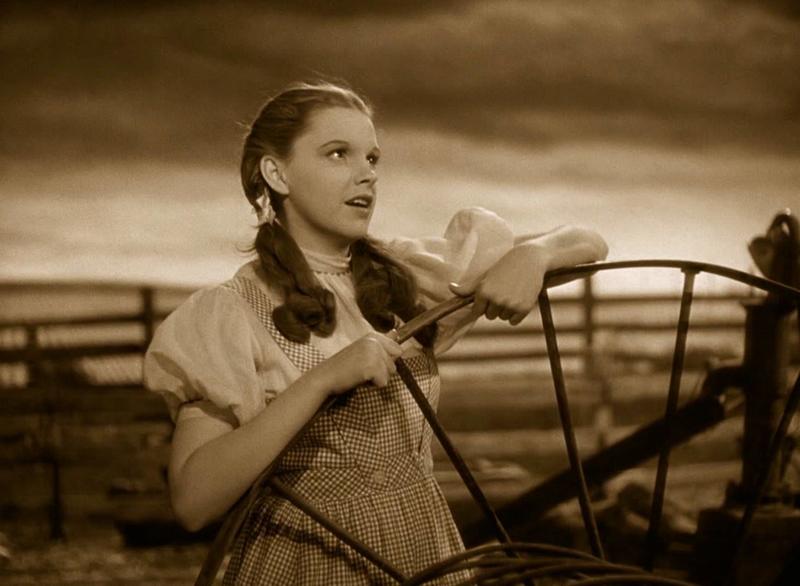
Studio execs at MGM idea the song made the Kansas scenes besides long. Moreover, filmmakers were concerned that children wouldn't understand the vocal's meaning. Luckily, this unfounded business concern melted like lemon drops. Unfortunately, Garland's tearful reprise of the song was left on the cut room floor.
The Tin Man Costume Didn't Allow Jack Haley to Rest Easy
Although Bert Lahr had to schlep around in a xc-pound panthera leo costume, Jack Haley didn't have it easy either. From the lingering concerns about the aluminum paste-based makeup on his face up and easily to the minimal flexibility of the "tin" torso and arms, Haley faced some challenges.
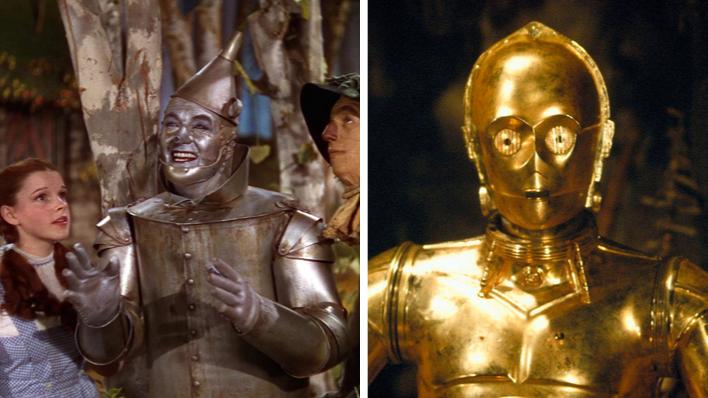
Reportedly, his costume was so stiff that he had to lean against a board to rest properly. Many years later, role player Anthony Daniels, known for playing the protocol droid C-3PO in the Star Wars films, had the same issue with his rigid costume. Information technology seems fifty-fifty fantasy and sci-fi can't help folks escape all their problems.
The Original Tin can Homo Was Rushed to the Hospital
Initially, Buddy Ebsen was cast as the Scarecrow, but traded parts with Ray Bolger. However, Ebsen's new graphic symbol, the Tin Human, acquired him a world of problems. Namely, the grapheme'south silvery makeup contained a harmful aluminum dust that coated Ebsen's lungs.
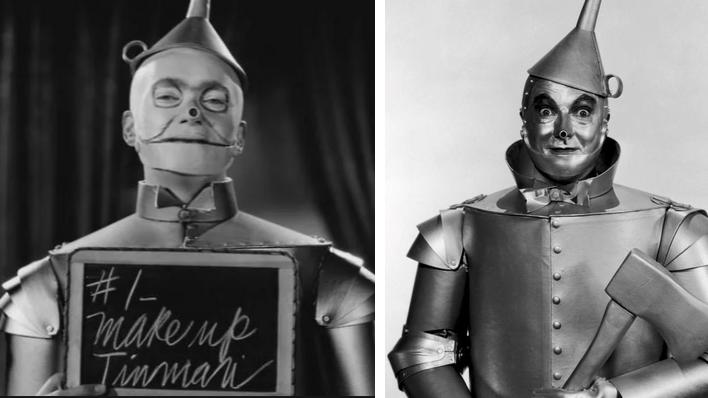
To brand matters worse, Ebsen had an allergic reaction, and, unable to breathe, he was rushed to the hospital. MGM recast the role with Jack Haley (and inverse up the makeup), merely didn't explicate why Ebsen "dropped out." Although Ebsen didn't appear in the final film, his vocals can be heard in "We're Off to Come across the Magician."
A Stocking & Some Miniatures Gave United states of america the Tornado
The tornado that strikes the Gale homestead is total of practical special effects that really hold upwardly. The funnel itself was actually a 35-foot long stocking made of muslin. The special effects team spun it effectually miniatures that resembled the farms and fields of Kansas. Against the painted backdrop, the tornado looks menacing.
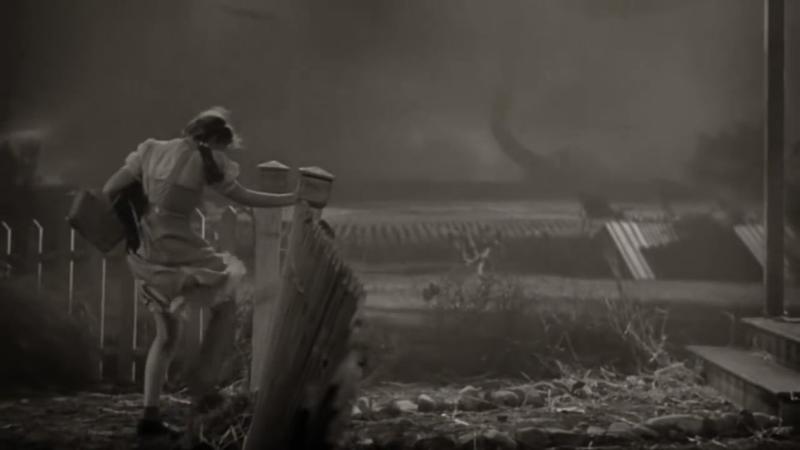
The Gale house, which falls from the heaven and into Oz, is but a miniature firm that was dropped onto a sky painting. Filmmakers then reversed the footage to make it look like the house was falling out of the clouds.
Hollywood Didn't Pay Upwardly Then Either
Pay inequality has always been an issue in Hollywood. For example, Adriana Caselotti, voice of the titular character in Walt Disney'southward Snow White and the Seven Dwarfs (1937), fabricated $970 for her performance. The film went on to make roughly $8 1000000.
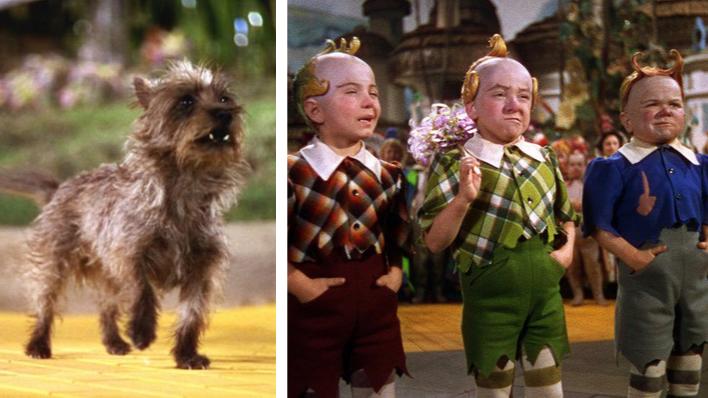
Co-ordinate to the Los Angeles Times, Judy Garland's pay was meliorate than Caselotti's — playing Dorothy earned her $500 a week — but it even so didn't reflect the film's success. Even more discouraging, the folks who portrayed the citizens of Munchkinland were paid a mere $fifty per week. (Meanwhile, Terry the dog earned $125 per week as Toto. A real yikes.)
Bert Lahr's Lion Costume Was Taxing
Originally, MGM thought it might cast its mascot — the actual king of beasts used in the studio's title card — as the cowardly character. Fortunately, for the condom of the actors and the animal, the filmmakers decided to bandage actor Bert Lahr as the anthropomorphic graphic symbol instead.
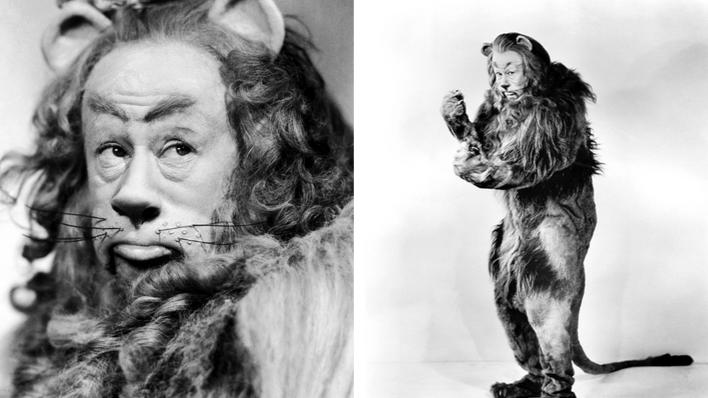
To make a convincing brute, the costume department fashioned Lahr a ninety-pound outfit fabricated from existent lion skin. However, the arc lights used on set made things a steamy 100 degrees during filming, which meant Lahr did a lot of sweating unrelated to his graphic symbol'due south fretfulness. Each night, two stagehands stale the costume for the next 24-hour interval.
The Initial Box Office Returns Were Uneven
The film started shooting in October of 1938 only didn't wrap until March of 1939, racking up an unheard of $ii,777,000 in costs. That'southward nearly $50 million adjusted for inflation. Upon its initial release, the movie only earned $iii meg at the box office — virtually $51.8 million by today's standards.
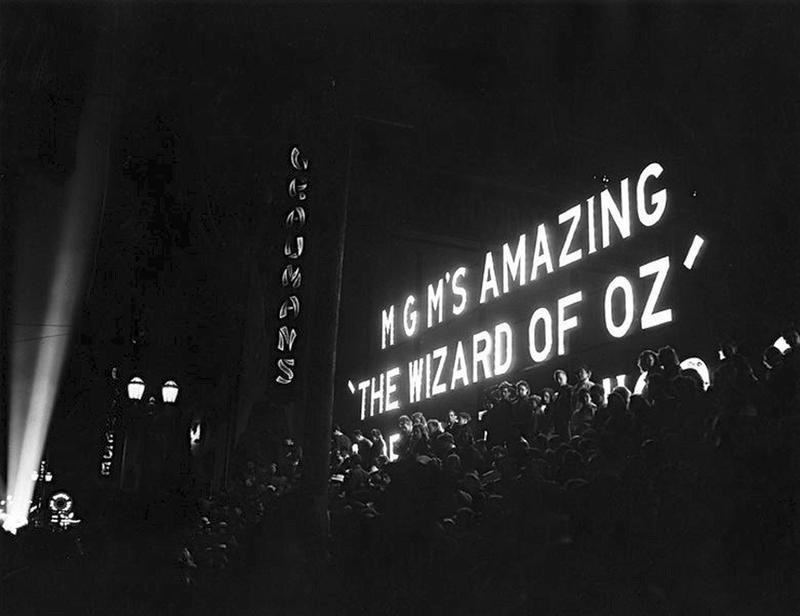
Although that seems impressive for a Depression-era film, recollect that Disney made $8 million with Snow White and the 7 Dwarfs (1937). The Sorcerer of Oz'southward modest success in the U.S. barely covered production and film rights' costs — MGM paid $75,000 to the publisher for those — only success overseas fortunately bolstered the film's returns.
The Dark Side of Oz in a Time Before "Me As well"
Judy Garland was simply 16 years old when she was bandage as Dorothy. Insecure and lonesome, she became addicted to amphetamines and barbiturates, which were frequently given to young actors to assist them sleep later on studios shot them upward with adrenaline and so they could work long hours.
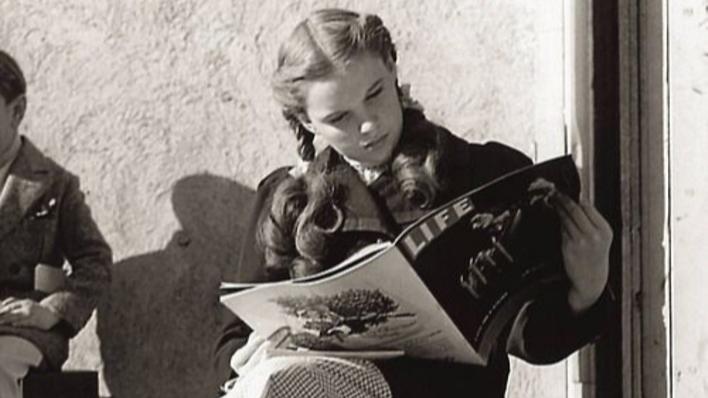
The spotlight — and her damaging contract with MGM — didn't help, leading to her lifelong struggles with an eating disorder and alcoholism. According to a writer for Express, "[Garland] was molested by older men, including studio chiefs [and head Louis B. Mayer], who considered her little more than their 'holding.'" Moreover, MGM forced Garland to stick to a wildly unhealthy nutrition of cigarettes, coffee and chicken soup.
The Voice of Snow White Had a Cameo
A few years before The Sorcerer of Oz debuted, Walt Disney'southward characteristic-length blithe moving-picture show Snow White and the Vii Dwarfs (1937) became a smash-hit. Not but did the motion-picture show revolutionize the animation industry, it also reinvigorated the fantasy genre.
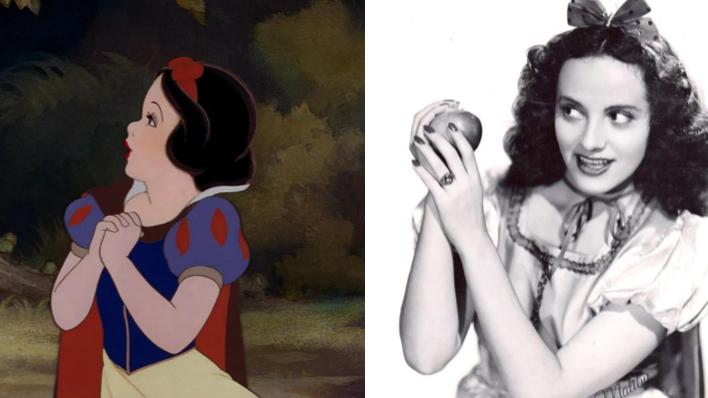
Disney wanted to follow upward Snow White — then the well-nigh successful moving picture of all time — with an adaptation of The Magician of Oz, merely MGM endemic the rights. By happenstance, Adriana Caselotti, who voiced Snow White, had an uncredited role in Oz. During the Tin Homo's "If I But Had a Heart," Caselotti speaks her sole line, "Wherefore art thou Romeo?"
The Ruby Slippers Are Props & Treasured Artifacts
Keeping in line with the book, Dorothy'southward iconic footwear was originally silver, but screenwriter Noel Langley felt the red colour would really pop in glorious Technicolor. Designed by MGM's chief costume designer Gilbert Adrian, the shoes are each covered in nigh 2,300 sequins.
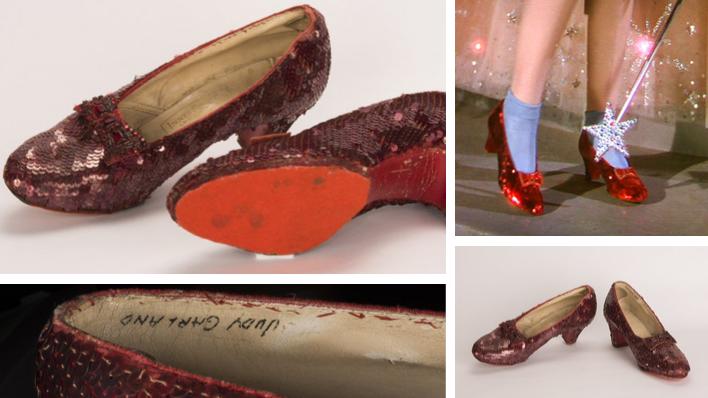
One of the remaining pairs is on view in the Smithsonian Establishment'due south National Museum of American History. Since the display is so heavily trafficked, the museum has replaced the carpet there several times. Some other pair were stolen from Minnesota's Judy Garland Museum in 2005, but the FBI recovered the slippers for the institution in 2018.
Only One Sequence Was Filmed "On Location"
The Sorcerer of Oz is your classic adventure story, and Dorothy'southward quest leads her from a Kansas farm to some other world — complete with corn fields, poppy-filled meadows and forests. However, despite all these scenic locations, most all the scenes were shot on a soundstage.
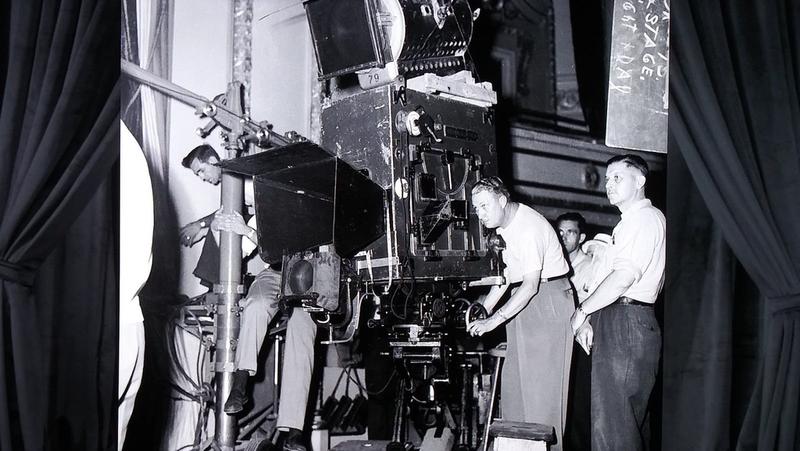
As was customary at the time, immense, detailed backdrops were painted by studio artists, making it possible for filmmakers to ship audiences to far away places without filming on location. In fact, the but location footage in the moving picture is the opening title sequence — those clouds are 100% the real bargain.
A Second Toto Was Brought In
Toto, played primarily by Terry, is ane of the most love dogs in movie history. Terry was famously non a huge fan of special furnishings and can often be seen running out of a shot when something loud or alarming happens — like when the Tin Man spouts out all of that steam.
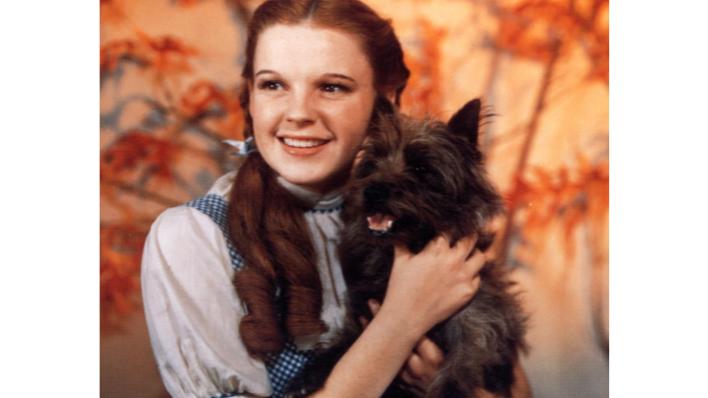
Later one of the Witch'south guards accidentally stepped on her, Terry was on bedrest for 2 weeks. Filmmakers went through two doubles to observe 1 that resembled the original canine actor more than closely.
Fun fact: Judy Garland was so fond of Terry that she wanted to adopt the domestic dog.
Margaret Hamilton "Mourns the Wicked" Witch
In addition to beingness a huge fan of the Oz books, Margaret Hamilton also believed her character was more merely your run-of-the-mill evil villain. More than 35 years subsequently the motion picture debuted, Hamilton, donning her Witch's costume to testify kids it was make-believe, appeared on Mister Rogers' Neighborhood, where Fred Rogers interviewed her about the character.
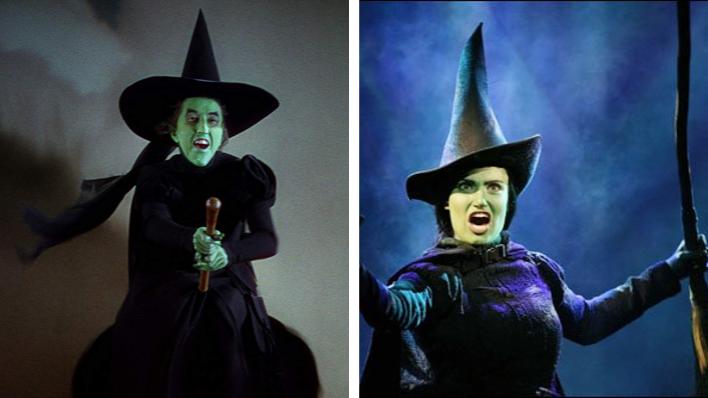
Co-ordinate to Hamilton, the then-called Wicked Witch relished everything she did, merely she was as well a sad, lonely figure. In short, things never went well for the frustrated Witch. Oddly enough, the Broadway musical Wicked also takes this approach to the Witch's graphic symbol.
The "Equus caballus of a Different Color" Was Made Possible Cheers to a Food Production
In 1939, audiences were just every bit amazed as Dorothy, Scarecrow, Can Man and the Cowardly Lion when the horse in Emerald City took on a rainbow of colors. This "equus caballus of a different color" was made possible thank you to a surprising food detail…
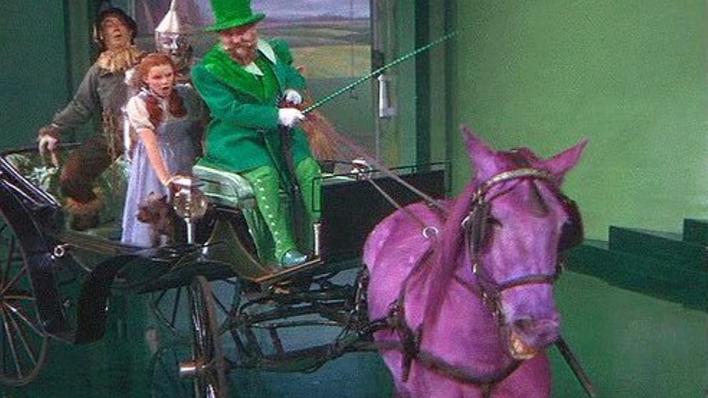
Jell-O crystals were used to color the horses, which meant filmmakers had to move chop-chop — the animals were eager to lick upwardly the sugariness treat. Simply the colorful steed isn't the only interesting component in this fan-favorite scene. The horse-drawn carriage was once owned by President Abraham Lincoln and now resides at the Judy Garland Museum.
The Makeup Department Hired on Actress Hands
From the citizens of Munchkinland and Emerald City to the Witch's flying monkeys, so many actors had to undergo a makeup transformation in order to give life to this fantasy film. To go along up with the daily demands, MGM called upon workers from the studio mailroom and courier service to manage makeup stations.
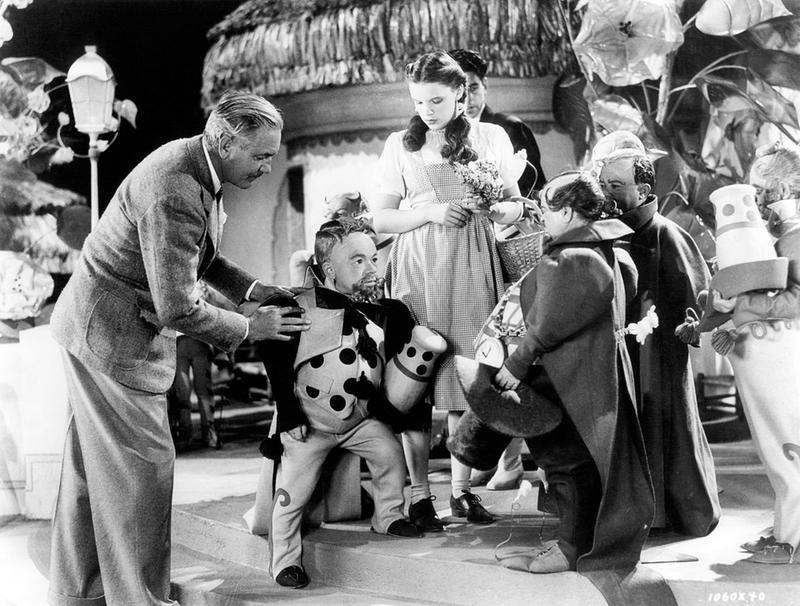
Since most of the Ozian ensemble required prosthetics, makeup artists — and "makeshift" artists — formed a kind of costuming assembly line. Near actors had to arrive before five:00 in the morning — vi days a week! — to begin the intensive process.
Memorable (& Often Misquoted) Lines Fill the Picture
The film is chock-full of iconic, memorable songs, and it has the swell fortune of being responsible for some of the most quoted lines in picture history equally well. In 2007, Premiere compiled a listing of "The 100 Greatest Movie Lines" and placed a whopping three of the film'due south lines on the list.
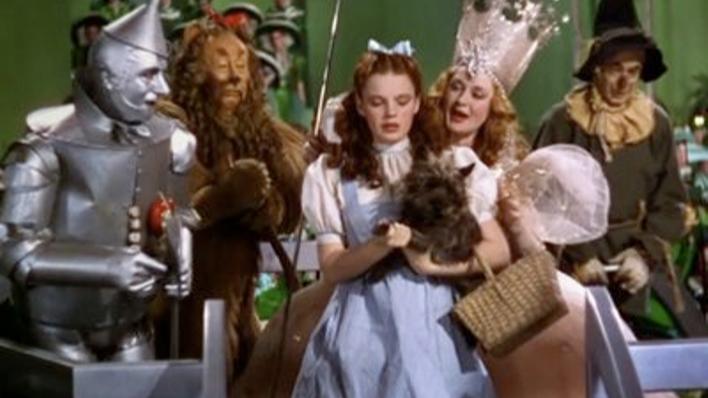
"Pay no attention to that human backside the curtain" was voted #24, while "There'due south no identify similar habitation" nabbed the 11th spot. Finally, the ofttimes misquoted "Toto, I have a feeling we're not in Kansas anymore" landed in the 62nd spot.
The Witch's Fire Employed Some Technical Wizardry (& Juice)
Clearly, the technical wizardry — or witchcraft — in the movie is incredible. Similar the "equus caballus of a different colour" sequence, another iconic, special effects-heavy scene harnessed the power of everyday household items to pull off fun tricks.
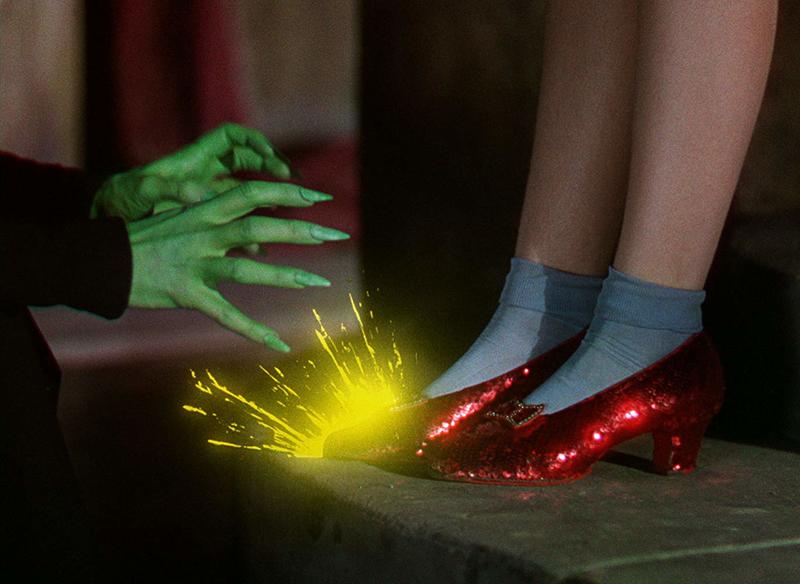
Shortly afterwards Dorothy arrives in Munchkinland, the Wicked Witch tries to snatch the cherry-red slippers from the immature girl's feet. However, burn strikes the Witch's easily, repelling her. This "fire" is actually apple juice spouting from the slippers in a sped-up clip to make it look more flame-like.
Technicolor Required Some Ingenuity in the Props Department
Experimenting with Technicolor was part fun and part trouble-solving for filmmakers. In lodge to properly capture scenes with the Technicolor camera, the soundstage needed to be lit with arc lights, which often heated the fix up to a toasty 100 degrees.
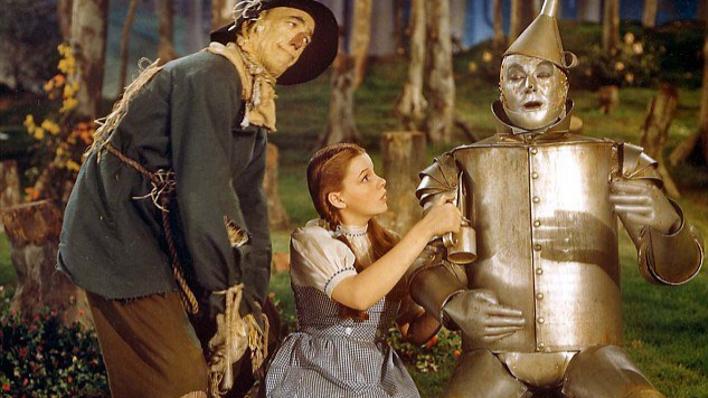
After the lights were set, the experts experimented with what would look best on moving-picture show, particularly in colorized form. For example, the white office of Dorothy'southward dress is actually pinkish — simply because information technology filmed better. And the oil the Can Homo is so excited about? It's actually chocolate syrup.
The Wicked Witch of the E Makes More Than One Appearance
Part of the Wicked Witch of the West'southward beef with Dorothy is that the young girl dropped a house on her sister, the Wicked Witch of the East, who was the brusk-lived owner of the ruby slippers. Although Margaret Hamilton already plays both the Wicked Witch of the Due west and her Kansas counterpart Almira Gulch, she also plays the Wicked Witch of the East — if just briefly.
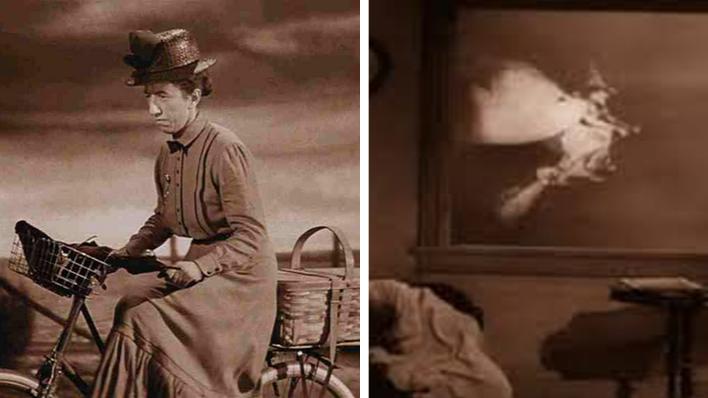
During the tornado sequence, an addled Dorothy looks out her sleeping room window and watches Gulch transform into a witch, her shoes shimmering. For fans, this glint indicates the witch exterior the window is wearing the ruby slippers. The restored version of the film makes that shimmer even more noticeable.
The Film's Running Time Was Cut Down Several Times
The first cut of the picture show clocked in at a running time of 120 minutes. Although that seems like nothing by today's Marvel film standards, producer Mervyn LeRoy felt it was long and unwieldy and wanted to chop off 20 minutes.
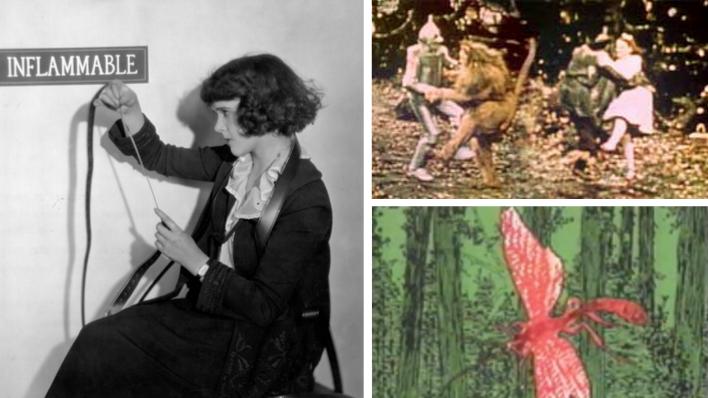
After cutting the famed "Jitterbug" number (peak right) and an extended Scarecrow trip the light fantastic toe sequence, the motion-picture show was 112 minutes long. LeRoy held a second preview screening, and, afterwards, nixed Dorothy'due south "Over the Rainbow" reprise, an Emerald City reprise of "Ding! Dong! The Witch Is Dead," a scene where the Tin Man becomes a human beehive (Yikes!) and a few Kansas sequences.
So Much for a "Wicked" Witch
Filmmakers deemed Margaret Hamilton'southward Wicked Witch of the West performance likewise frightening for audiences and cut or trimmed many of her scenes. Only not everyone thought her performance was terrifying — namely Judy Garland, who played the Wicked Witch'due south nemesis, Dorothy Gale.
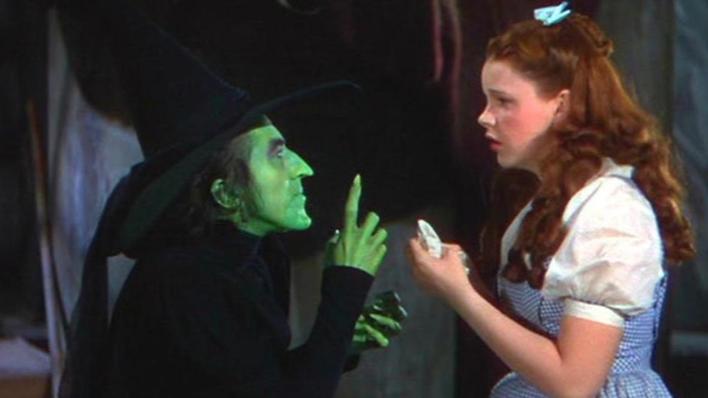
Off-screen, the film's starring foes were really friends. One story that emerged from the ready described Garland excitedly showing off a dress to Hamilton, declaring she was going to wear it for her graduation. Unfortunately, MGM'due south Louis B. Mayer sent Garland on a press bout the day of her graduation. Upset, Hamilton phoned Mayer and chewed him out.
Giving Credit to Technicolor
In the opening credits, the text reads "Photographed in Technicolor," as opposed to the more than apt "Color Sequences by Technicolor." The phrasing of the credits makes it seem as though the unabridged film was shot in colour. Was this done deliberately, or was it a minor syntactical faux pas?
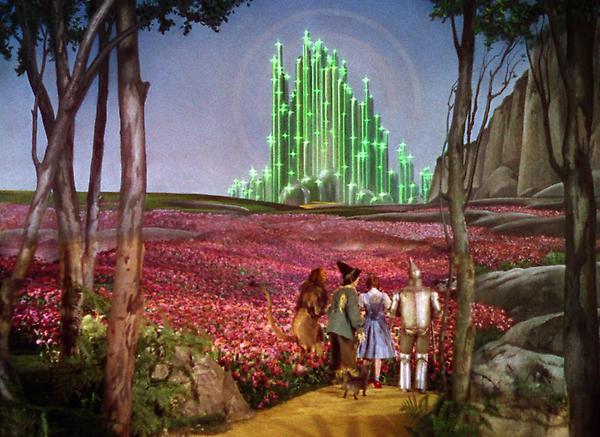
Information technology's widely believed this was a flake of a stunt washed to heighten the surprise of the motion picture turning into full three-strip Technicolor when Dorothy arrives in Oz. Posters made at the fourth dimension of the film's debut made no mention of sepia tint (or "black-and-white"), adding acceptance to this theory.
1 of History'south Near-Watched Films
Although The Sorcerer of Oz proved popular in theaters, another film released the same year, also directed by Victor Fleming, really topped the box office. (Yous may have heard of that picayune motion-picture show — information technology'southward called Gone with the Wind.) Even so, MGM'south musical fantasy may have more staying power than other films of the era, thanks in part to re-releases.
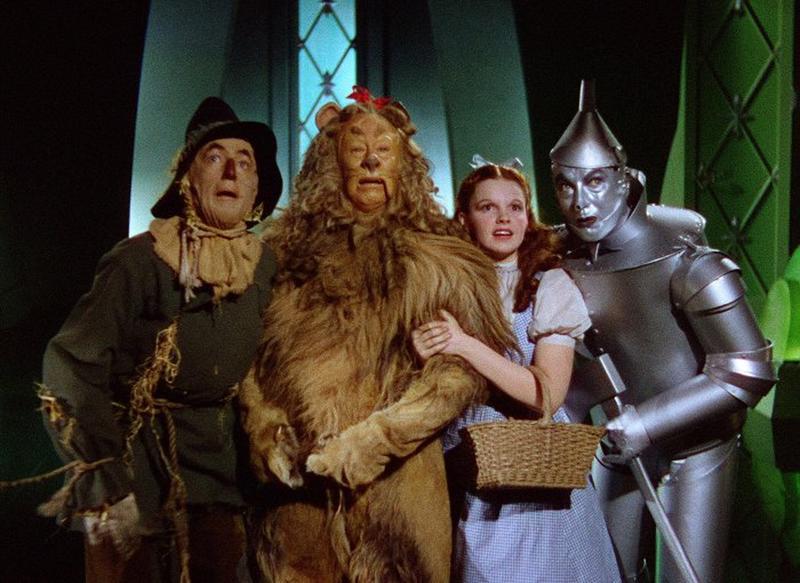
The film was first broadcast on television on November iii, 1956, and garnered an impressive 44 million viewers. Information technology's believed that The Wizard of Oz is one of the 10 most-watched feature-length movies in motion picture history, largely due to the number of annual telly screenings, theater viewings and diverse format re-releases.
burdickalwastood56.blogspot.com
Source: https://www.ask.com/entertainment/wizard-of-oz-facts?utm_content=params%3Ao%3D740004%26ad%3DdirN%26qo%3DserpIndex
0 Response to "2 Oz Its a 10 Miss America Review"
Postar um comentário